When radon leaves from the bedrock into the exterior air, it is watered down to such low focus that it presents a negligible risk to health. It can gather to high degrees when radon is confined to enclosed or badly ventilated rooms. Since these locations are local to the source as well as are usually improperly ventilated, radon degrees are generally highest in cellars and also creep areas. Radon direct exposure is the # 1 reason for lung cancer in non- cigarette smokers.
How much does it cost to fix radon in house?

The cost of a mitigation system may vary according to the home's design, size, foundation, construction materials and the local climate. Radon reduction systems average costs nationally are $1,200 with a range from $800 to $1500 common depending on house and market conditions.
High degrees of radon in residences normally come from the surrounding dirt. Radon gas from the soil gets in structures with openings as well as splits. The EPA has actually identified Putnam Region as a "high threat" radon area. Nevertheless, the only method to recognize if you have high radon degrees in your home is to check it.
Does seller have to fix radon?
It's very likely that your future buyer will make you fix the radon problem before they will purchase the home. It's good to just take care of it during your real estate deal. Sometimes the seller pays for it all, sometimes they fund a credit and sometimes there is a split.
If your residence has hazardous levels of radon, evaluating is the only approach for knowing. Continue reading for more information regarding radon testing and also just how to reduced levels in your home. But first, let's talk about the hazardous gas and also the dangers associated with it. Radon can quickly accumulate to harmful degrees inside structures. The natural decay of uranium results in the release of radon in rock, water as well as dirt.
What kind of cancer is caused by radon?
Radon decays quickly, giving off tiny radioactive particles. When inhaled, these radioactive particles can damage the cells that line the lung. Long-term exposure to radon can lead to lung cancer, the only cancer proven to be associated with inhaling radon.
The dangers to your health from radon
What do you do if your house has radon?
Radon can seep into any home that is in contact with the ground. It is undetectable unless you perform a radon test. It is the second leading cause of lung cancer and according to the EPA and CDC, it kills more than 20,000 annually. It is not something you want in the home you are buying.
Numerous states have active radon screening and also mitigation programs in position, which need testing in buildings such as public institutions. Nevertheless, these are not standard across the country, and the policies as well as regulations on reducing high radon levels are even less usual. Just regarding 20% of all institutions nationwide have done screening, despite the fact that the EPA recommends that every institution be checked. These numbers are probably not high enough to guarantee defense of the majority of children from elevated radon direct exposures.
Is radon really a big deal?
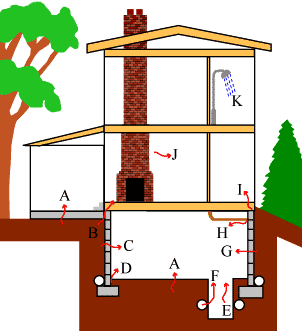
Radon is a radioactive gas that has been found in homes all over the United States. It comes from the natural breakdown of uranium in soil, rock, and water and gets into the air you breathe. Radon typically moves up through the ground to the air above and into your home through cracks and other holes in the foundation.
Lung cancer cells is the 6th leading general cause of death and also the primary cause of cancer death worldwide. It https://issuu.com/binassixv0/docs/171168 is recognized to be predominantly triggered by persistent inhalation of cigarette smoke and/or contaminated radon (222Rn) gas, frequently combined with underlying hereditary predispositions1,2,3,4,5,6. Radon is a key cause of lung cancer cells in never ever smokers and also the second leading cause in smokers, encompassing an estimated 3-- 20% of lung cancer cells deaths worldwide7,8. Aeriform radon isotopes arise from rotting uranium, thorium and radium-containing minerals in bedrock, surficial products as well as groundwater that prevail globally1,9. Although emerging naturally, radon and radon-derived 'daughters' (consisting of 214Po, 218Po) can concentrate within the constructed environment to degrees normally not observed in nature.
Why is radon bad for you?
Radon produces a radioactive dust in the air we breathe. The dust is trapped in our airways and emits radiation that damages the inside of our lungs. This damage, like the damage caused by smoking, increases our risk of lung cancer.
Will opening windows reduce radon?
Opening windows improves air circulation and ventilation, helping move radon out of the house and mixing radon-free outside air with indoor air. Opening basement windows helps reduce negative air pressure, diluting radon with clean outdoor air.
Where is radon found in the home?
Radon is a radioactive gas that has been found in homes all over the United States. It comes from the natural breakdown of uranium in soil, rock, and water and gets into the air you breathe. Radon typically moves up through the ground to the air above and into your home through cracks and other holes in the foundation.
- For many years, data that tracks radon degrees suggests that a large percentage of Pennsylvania homes have a serious radon issue.
- Radon gas threatens, and if the problem goes unattended, the radon concentration remains to increase inside your home.
- New Jersey homes and Delaware residences are taken into consideration in danger as well as a result of their proximity to the area.
- Radon gas enters your house or other residential property from the outdoors, and with time, slowly accumulates to harmful degrees that can result in a boosted risk of lung cancer cells or respiratory problems.
- Radon gas screening will aid guarantee your safety and security, as well as the procedure of radon testing is strongly suggested by The Department of Environmental Management (DEP) followed by reduction as well as remediation if required.
Is my house in a radon affected area?
Outside of your home, it remains at low levels and is relatively harmless. In the indoor environment, it wreaks havoc on your lungs. Radon is a carcinogen that causes lung cancer. While increased levels of radon can occur in the soil beneath any home, there You can find out more are specific areas of the country that are at a higher risk.
What causes radon?
Being exposed to radon for a long period of time can lead to lung cancer. Radon gas in the air breaks down into tiny radioactive elements (radon progeny) that can lodge in the lining of the lungs, where they can give off radiation. This radiation can damage lung cells and eventually lead to lung cancer.
How often should you test for radon?
Living pattern changes Whenever there is a change in your home, you should perform local radon testing. It's also recommended that you test your home for radon at least twice a year too. If your tests come back unusually high, then you should order one or two more tests so that you can compare the results.
Would you buy a house with radon?
Radon is a naturally occurring radioactive gas which may be found in indoor environments such as homes, schools, and workplaces. Radon is the most important cause of lung cancer after smoking.
How do you eliminate radon?
If a person has been exposed to radon, 75 percent of the radon progeny in lungs will become "harmless" lead particles after 44 years. When an alpha particle damages a cell to make it cancerous, the onset of lung cancer takes a minimum of 5 years but most often 15 to 25 years, and even longer.
Is radon only in the basement?
Radon is completely odorless as well as being invisible. Because it is often found unexpectedly in basements, some people mistakenly believe that it only occurs in basements. Most commonly homes with basements are suspect for having higher radon levels.
How many people die each year from radon?
Radon is responsible for about 21,000 lung cancer deaths every year. About 2,900 of these deaths occur among people who have never smoked.
Is radon something to worry about?
The average home has about 1.3 pCi/L of radon. Such levels aren't enough to worry about, but under the right conditions, they could make you sick. According to the EPA, a nonsmoker who was exposed to average levels of radon for a lifetime would have a 1 in 500 risk of developing lung cancer.
Should I buy a house with high radon?
EPA RECOMMENDS: If you are buying or selling a home, have it tested for radon. For a new home, ask if radon-resistant construction features were used and if the home has been tested. Fix the home if the radon level is 4 picocuries per liter (pCi/L) or higher.
Does Radon make you tired?
The more uranium there is, the more radon there is. That makes radon the second leading cause of lung cancer after smoking. But even minor symptoms like headaches, feeling unusually tired, itching or burning eyes, irritated skin, nasal congestion, a dry throat or nausea could be due to your home's indoor air quality.
Is a radon level of 5 bad?
Safe radon levels. The best radon level measurement would be zero. The average global outdoor radon level varies between 5-15 Bq/m3, equal to 0.135-0.405 pCi/L. For every 99.9 Bq/m3, or every 2.7 pCI/L increase in long term radon exposure, lung cancer risk rises 16 percent.
Can I install my own radon mitigation system?
In most cases, pros charge about $1,500 to install a radon mitigation system, but you can do it yourself for only about $500 in materials. So if you're fairly handy and have some carpentry, plumbing and electrical skills, you can install your own system in a weekend and save yourself a thousand bucks!